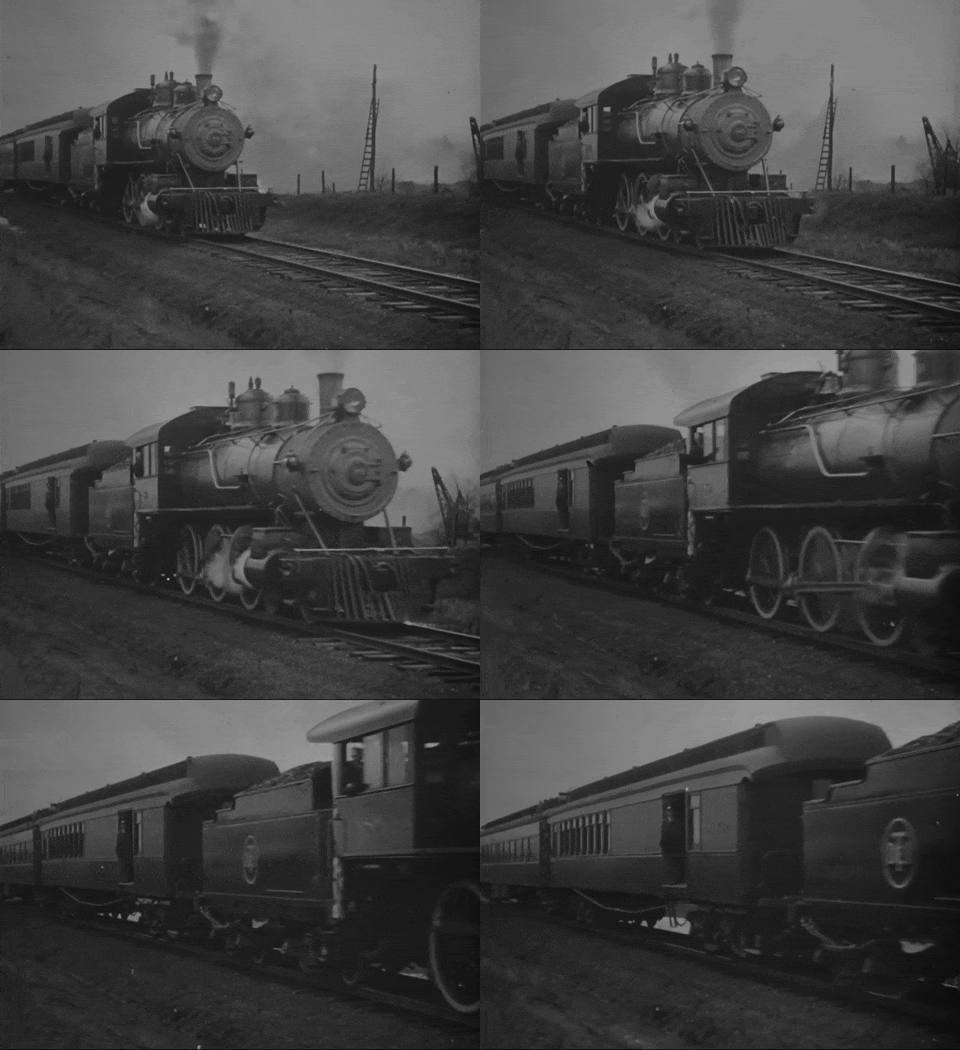
The New York Central Railway
Short History of the Embrun, Ontario Train Station
As you stand before Embrun’s railway station, you’re gazing upon a landmark brimming with history.
Imagine for a moment: it’s 7:45 a.m. on a warm summer Friday, July 25, 1898. At the Cornwall station, about 66 km away, a large crowd has gathered for the historic grand opening of the Ottawa and New York Railway. All the passengers are boarded and comfortably settled in their carriages.
This is a landmark moment: every small community along the line between Cornwall and Ottawa had wrestled with enormous fundraising efforts—mostly by farming families and small local entrepreneurs—to bring prosperity and growth to their villages. You can still spot huge cut stones, then farms, and beyond those farms families gathered to see the astonishing sight of a train passing by for the first time. No more long, perilous journeys through rain, freezing rain or snowstorms. Many had never seen a train before. First you arrive at Finch, then Berwick, and shortly after you cross into Crysler via a brand-new iron bridge.
At each stop, the platform overflows with people. Now you’re heading toward the village of St. Albert, known for its cheesemaking and famous curd cheese. The elegant steeple of Embrun’s beautiful church peeks out among the trees. Another railway bridge carries you over the Castor River, and you pull into the charming Notre-Dame Street station. The next stop is Russell, just three miles away, where a water tower stands. Russell earned a reputation as a pretty village with lovely homes—worth a visit, especially for its interesting local museum.
The line continues on to Ottawa, where Eastern Ontario farmers unload their cargoes. Eventually, this railway would link up with others all the way to New York.
The current Embrun station is not the original. The first station stood roughly where the COOP parking lot is today, on Notre-Dame Street. It faced southwest, with the track running right in front. A massive freight siding that could hold twenty-four cars ran from the station to Notre-Dame Street. There was also a stockyard, where cars of cattle, calves and pigs were sent off to Montreal every Monday. When the tracks closed in 1957, a final nostalgic tour from station to station was organized to mark the railway’s importance to all these communities.
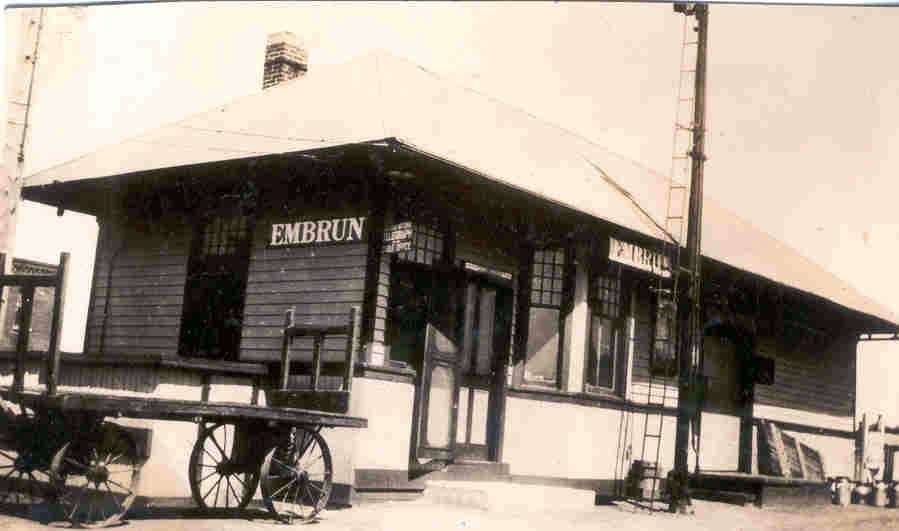
It’s believed that the original station—the last vestige of the New York Central in Embrun—was moved in 1961 to 24 Bourassa Street, converted into a residence, and still stands there, recently renovated. But some say otherwise. We’re not entirely sure.
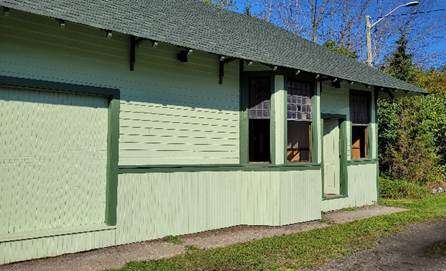
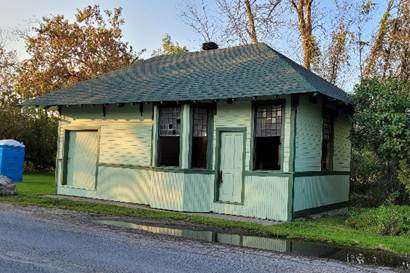
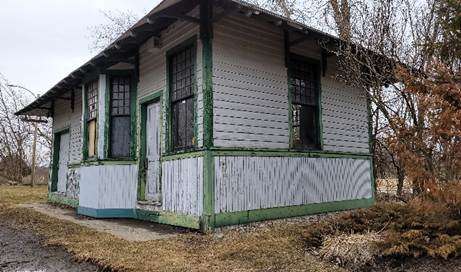
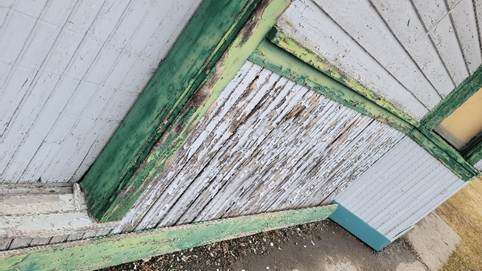
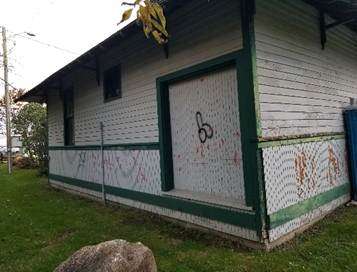
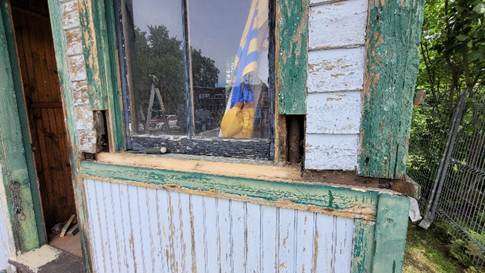
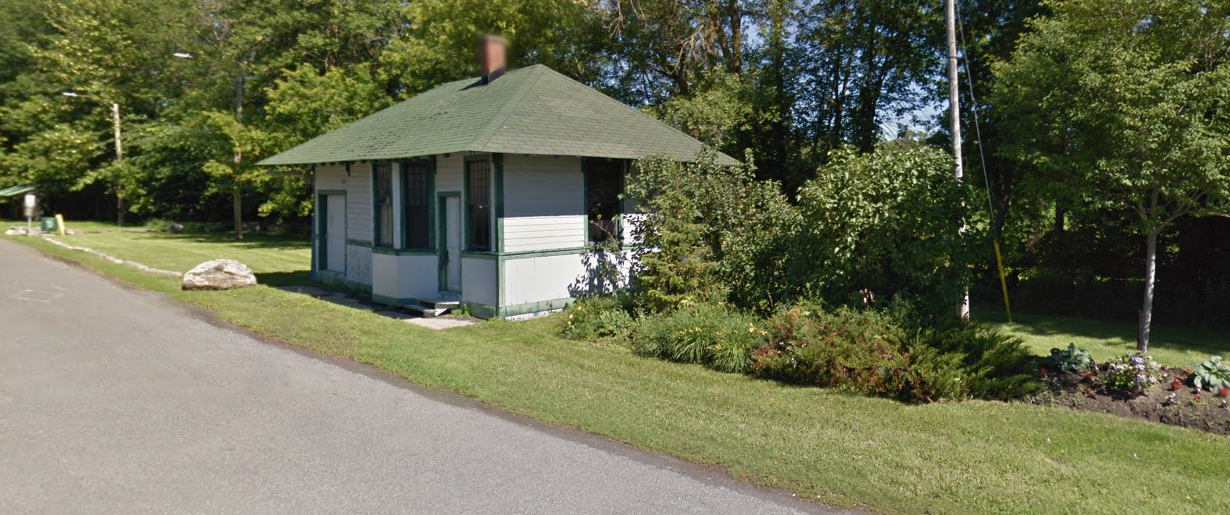
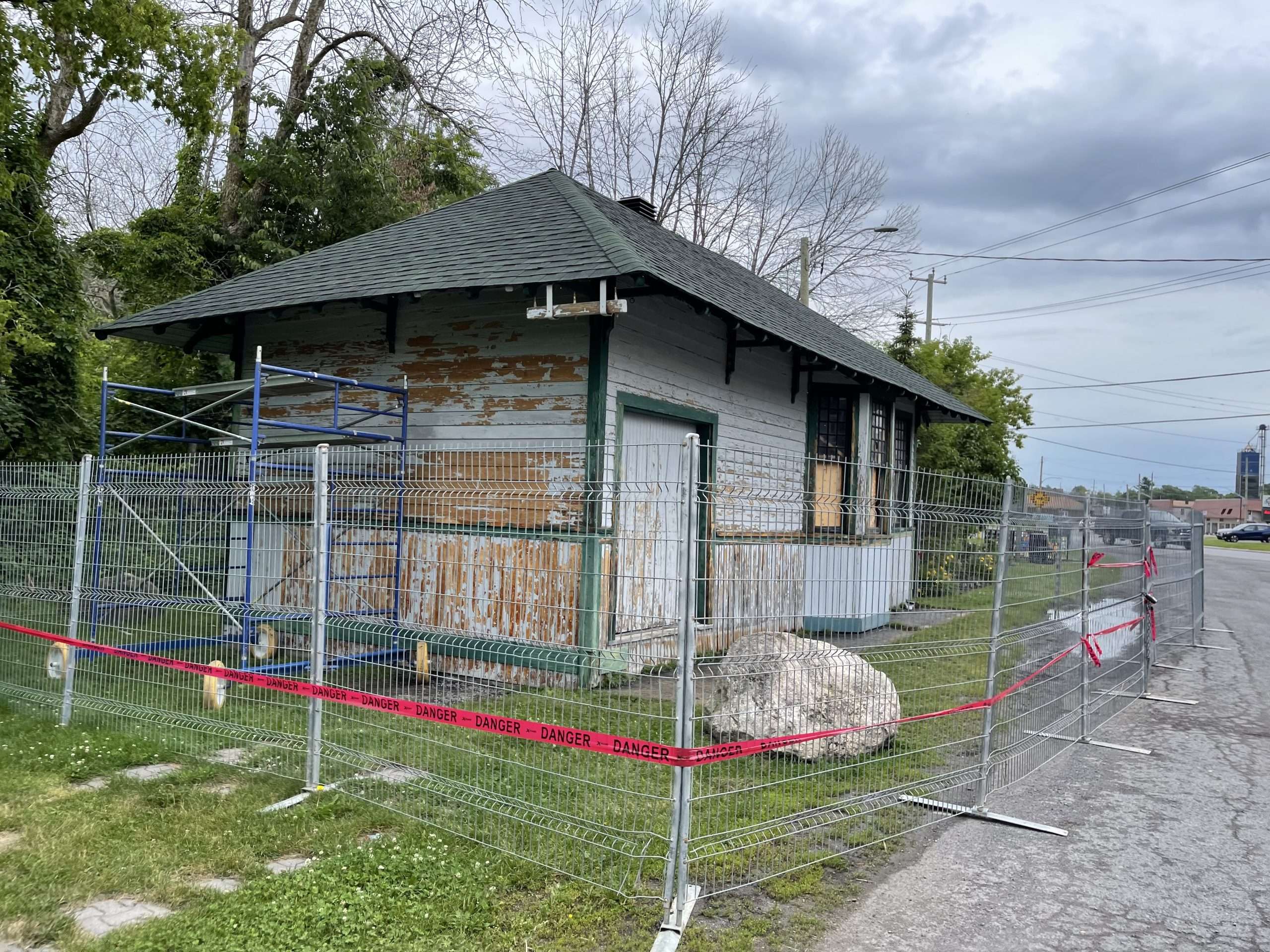
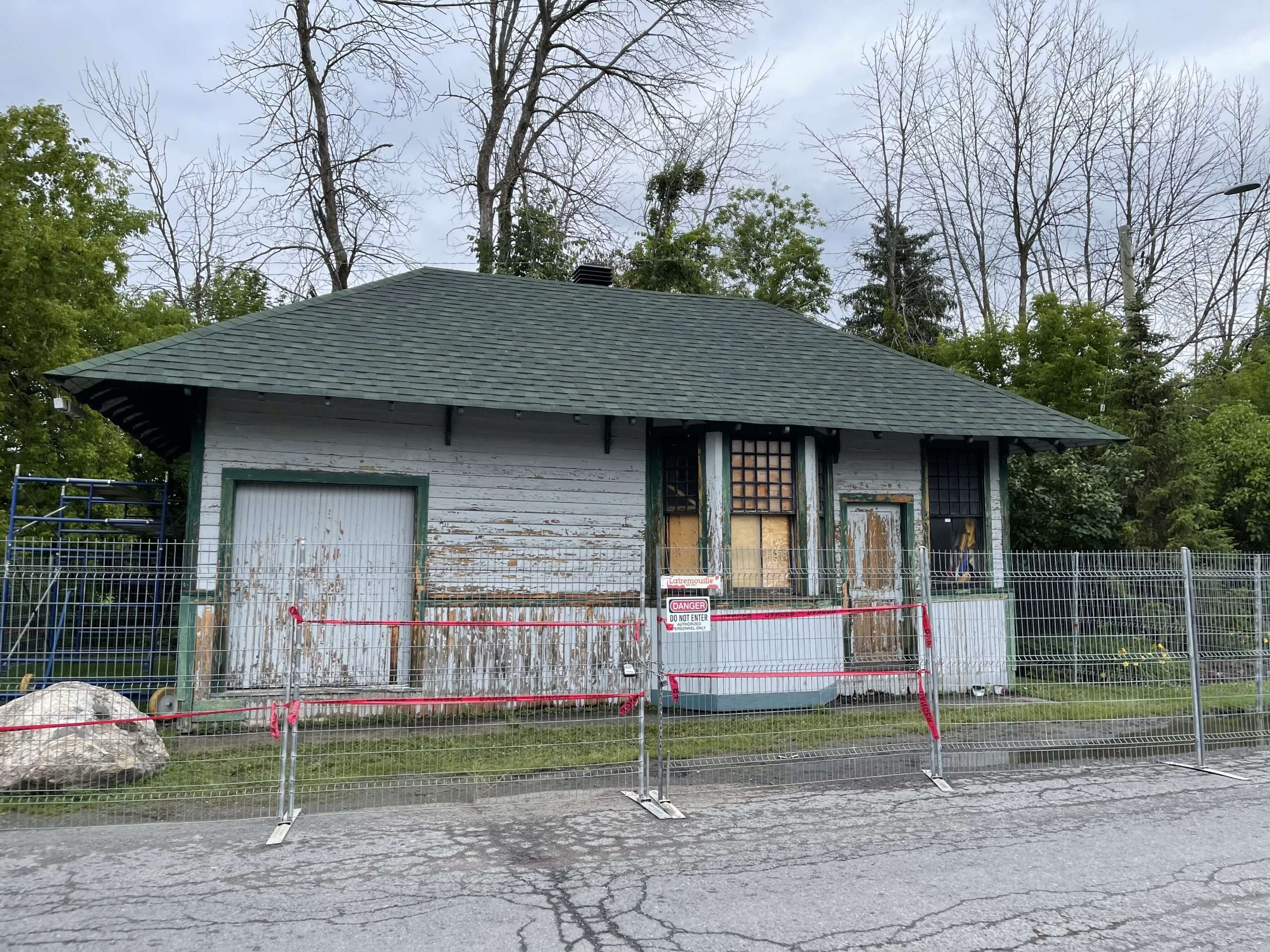
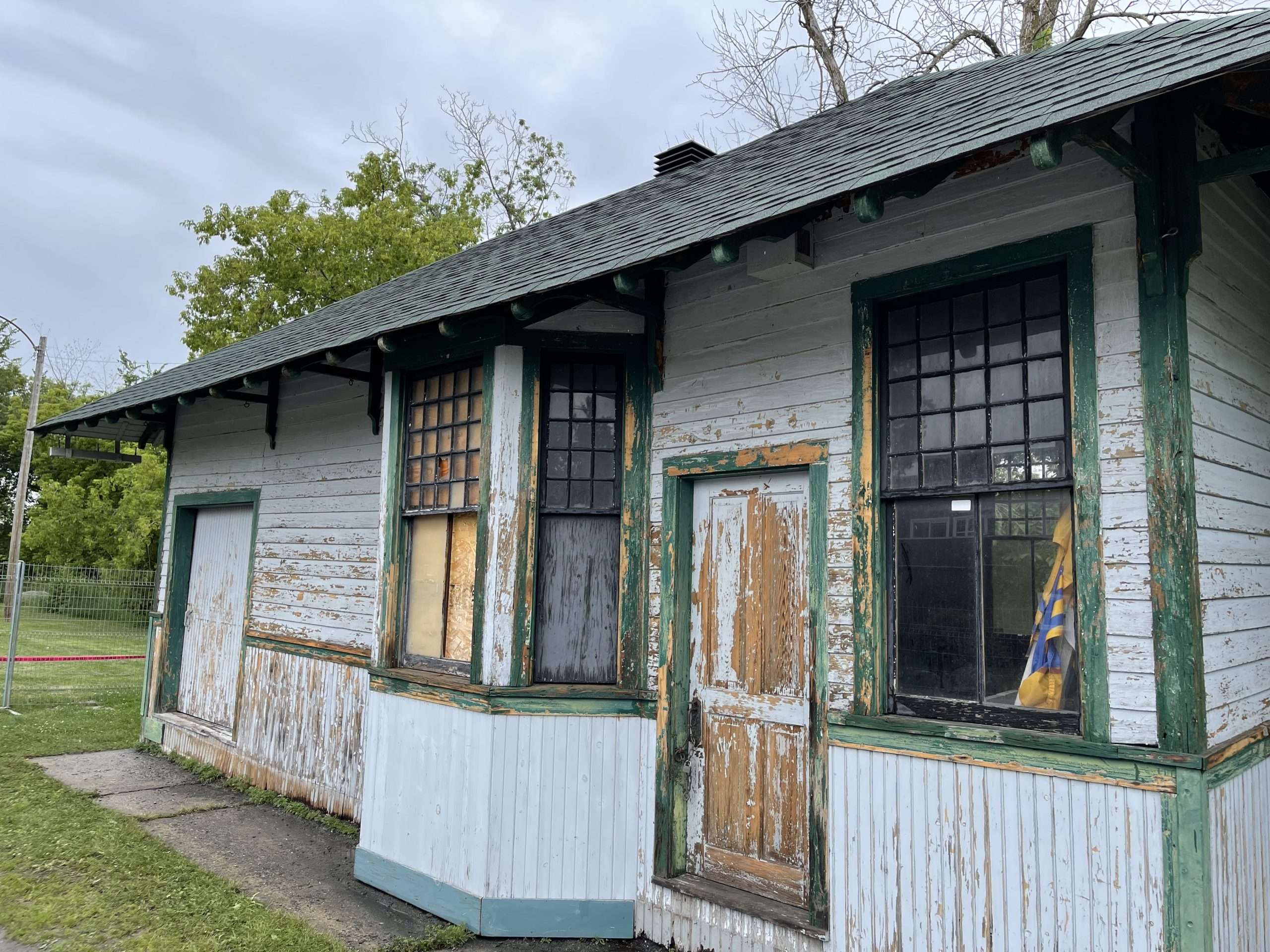
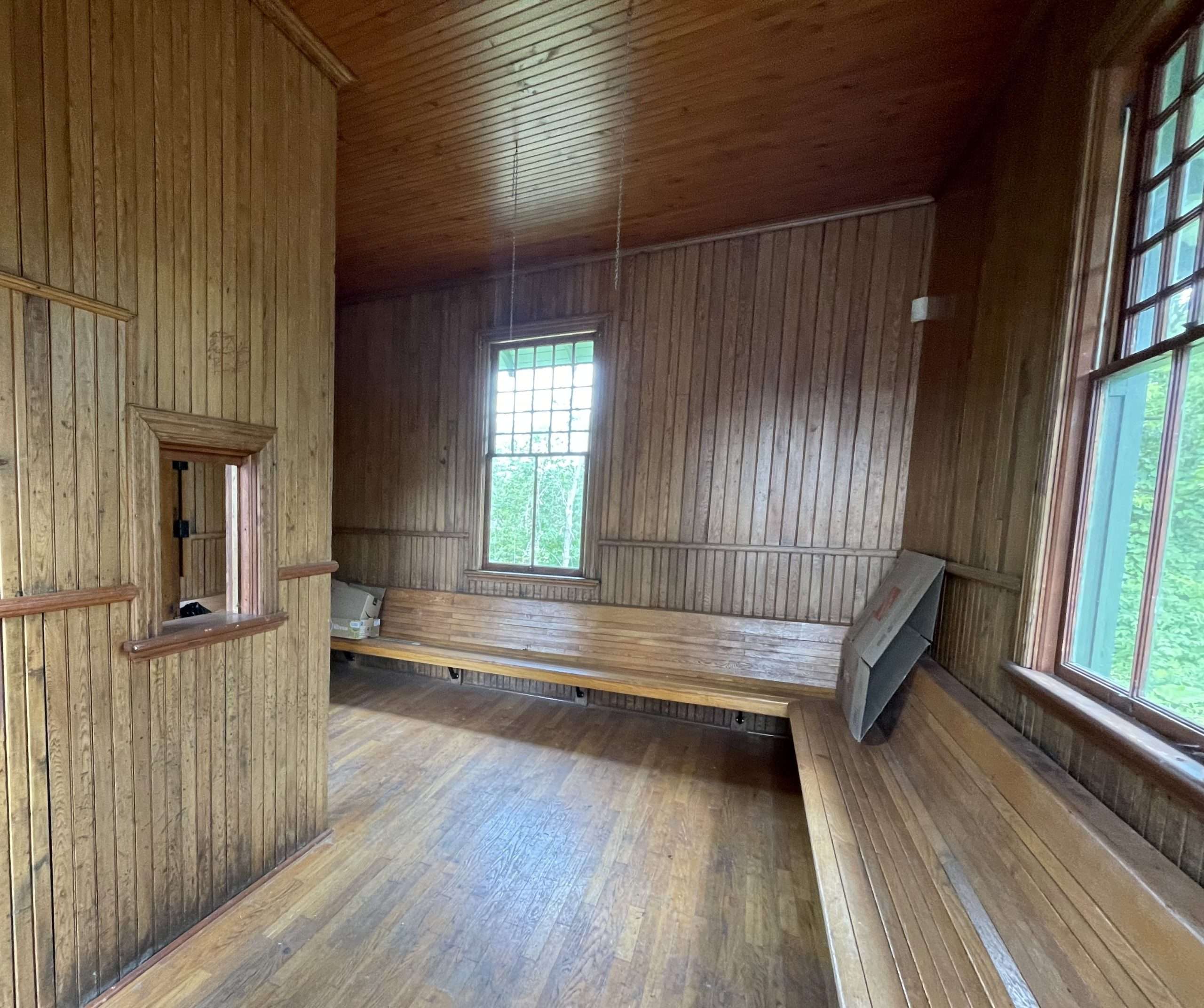
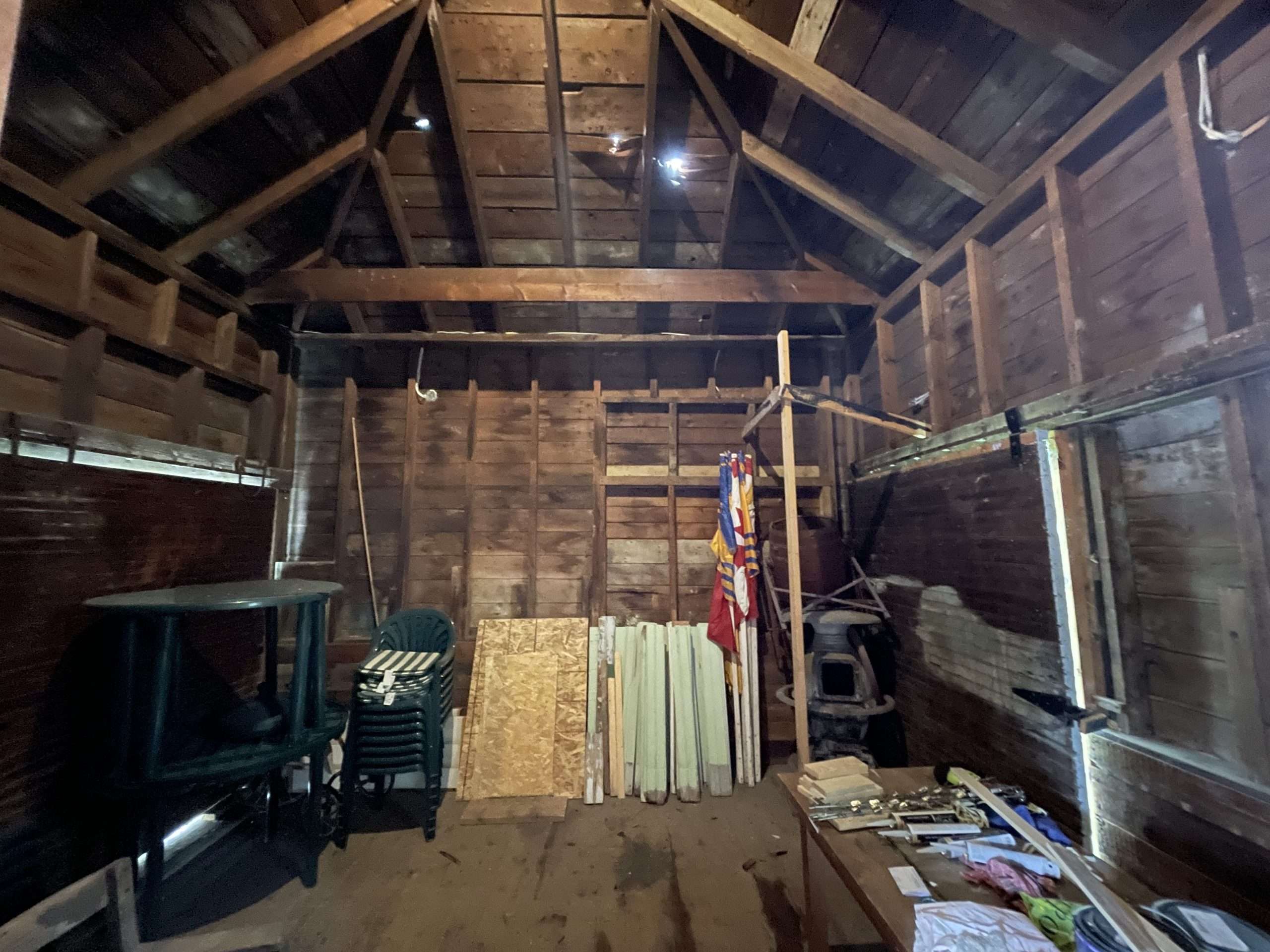
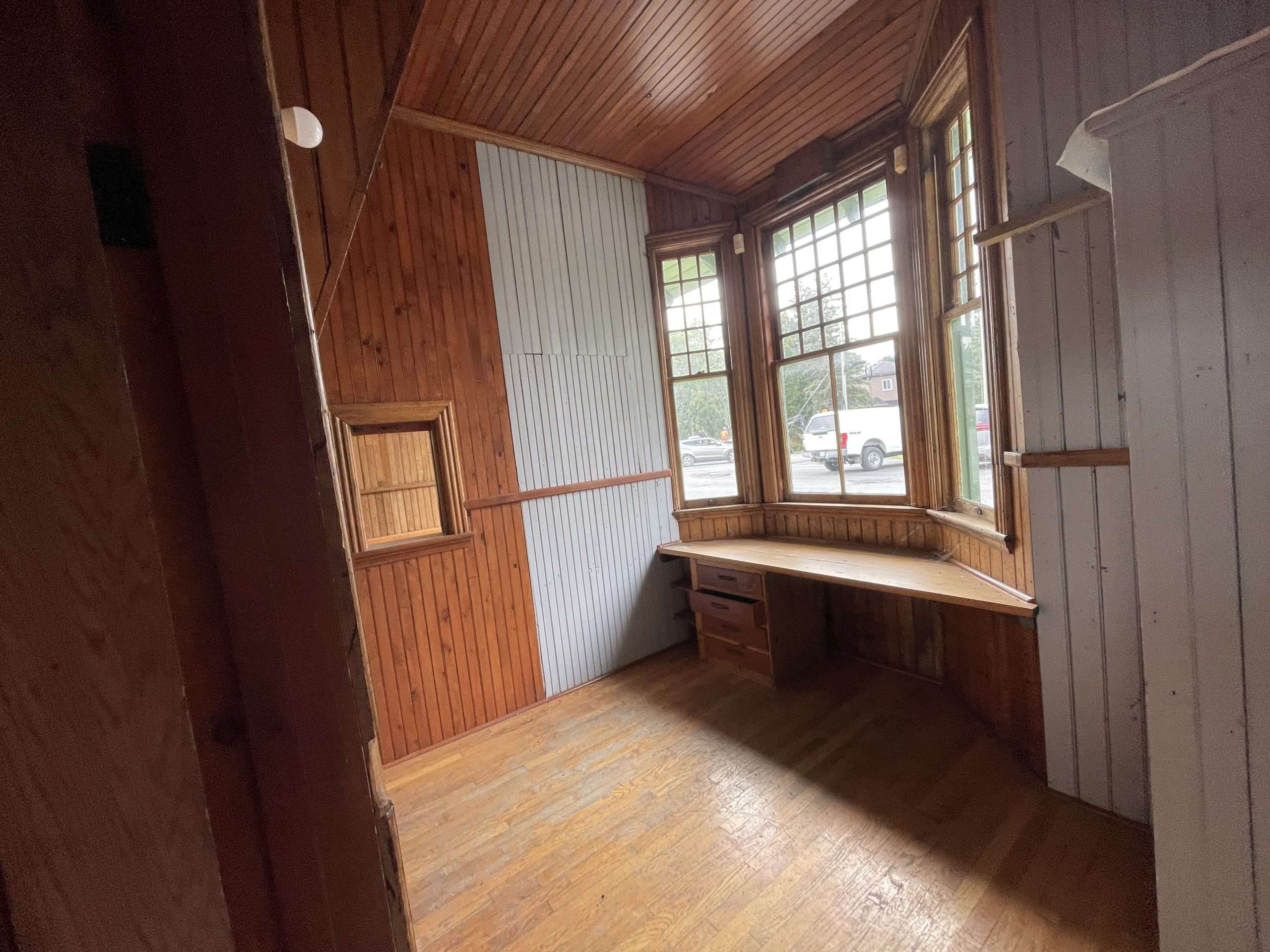
Meanwhile, the old Berwick station, built in 1898, was brought to Embrun in 1980, restored, and placed along the old rail line. For a while it served as a railway museum, then fell into disuse, as the photo below shows.
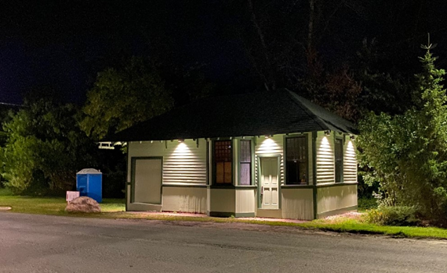
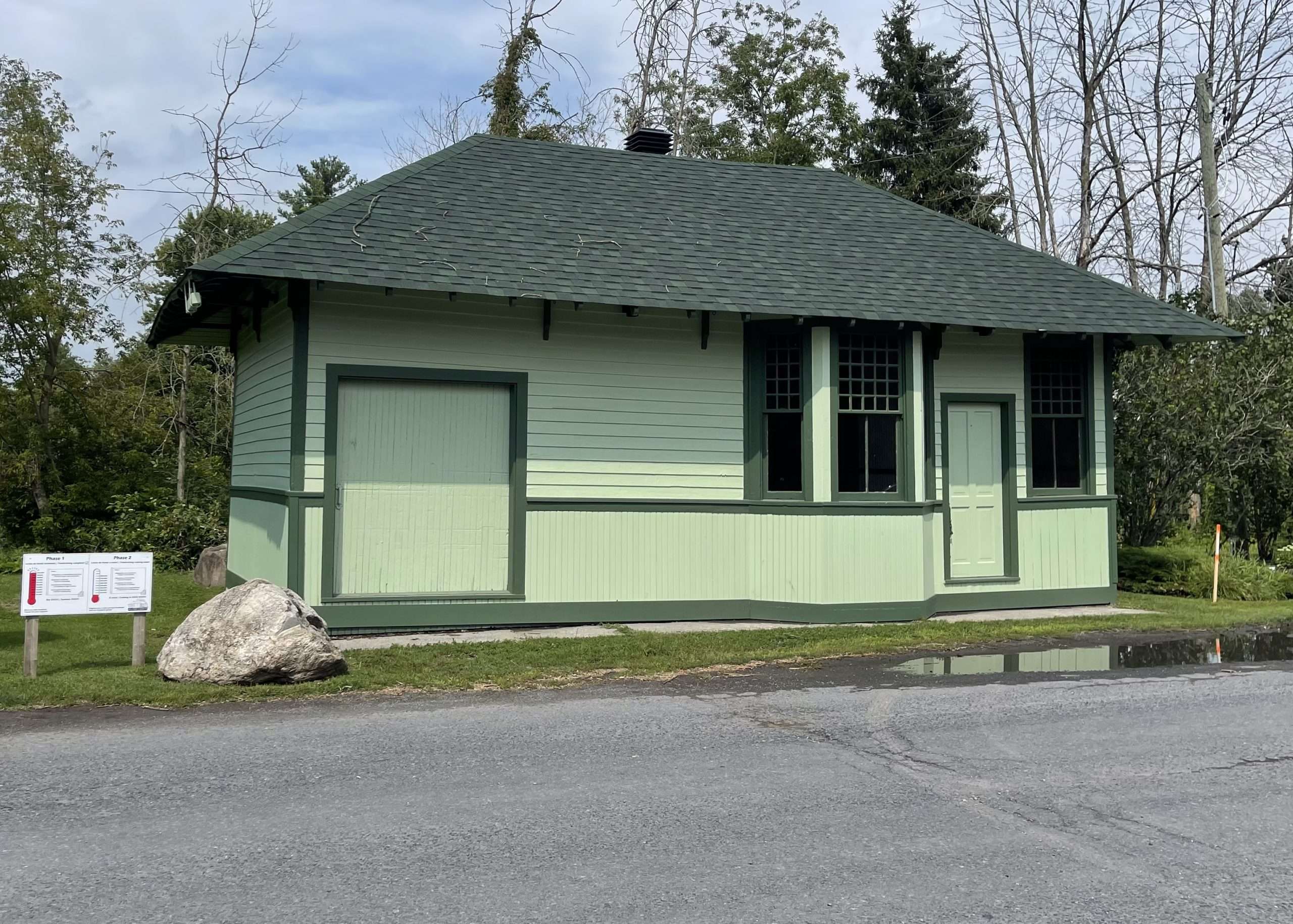
In 2022 the municipality prepared to sell this station, but the community rose up in protest. A citizens’ committee formed, and thanks to their efforts, a stay of execution was granted. The committee convinced the town of the station’s potential and pledged to raise the funds for its renovation. Residents and business owners rallied together. Grants, in-kind donations, and volunteer hours from local businesses completed the financing for this phase. After exhaustive research (see “The Little History of the Station’s Colours”), the exterior and windows were repaired and repainted in the original colours; woodwork and window frames were restored.
It’s believed that the original station—the last vestige of the New York Central in Embrun—was moved in 1961 to 24 Bourassa Street, converted into a residence, and still stands there, recently renovated. But some say otherwise. We’re not entirely sure.
Meanwhile, the old Berwick station, built in 1898, was brought to Embrun, restored, and placed along the old rail line. For a while it served as a railway museum, then fell into disuse, as the photo below shows.
In 2022 the municipality prepared to sell this station, but the community rose up in protest. A citizens’ committee formed, and thanks to their efforts, a stay of execution was granted. The committee convinced the town of the station’s potential and pledged to raise the funds for its renovation. Residents and business owners rallied together. Grants, in-kind donations, and volunteer hours from local businesses completed the financing for this phase. After exhaustive research (see “The Little History of the Station’s Colours”), the exterior and windows were repaired and repainted in the original colours; woodwork and window frames were restored.